From Athens to Five Provinces: Seeing Precision Farming at Work

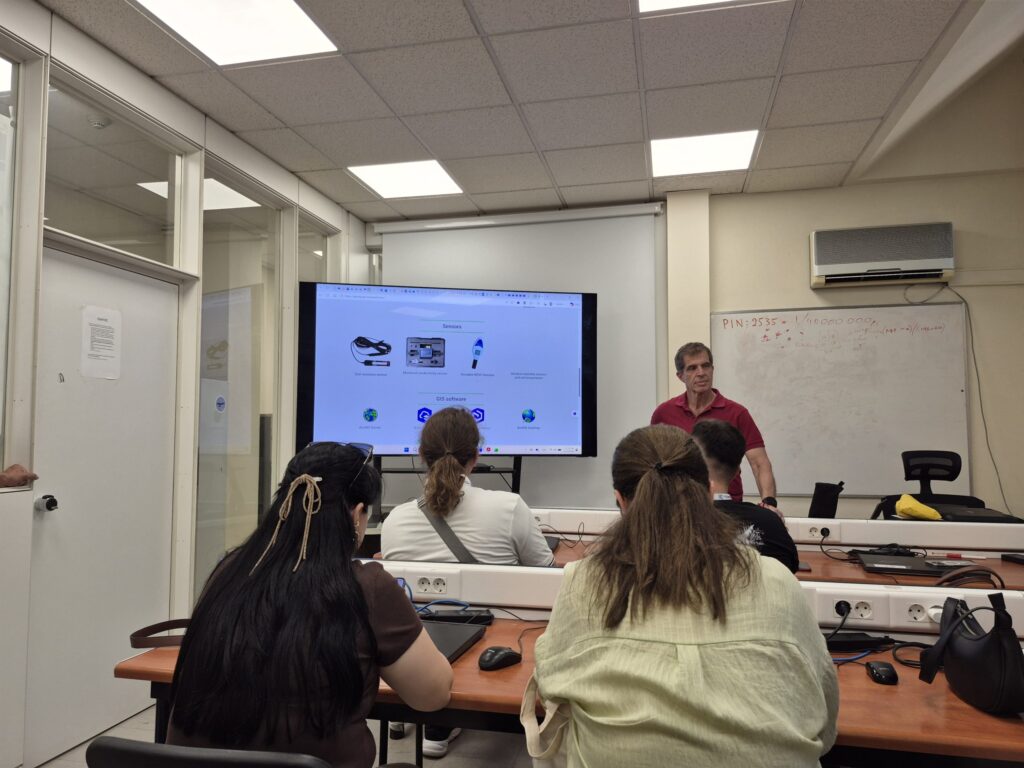
As part of the project "Precision Farming for a Greener Tomorrow: Advocating for Sustainable Agriculture", a technical visit to Athens took place on 9-12 June 2026. Coordinated by the Green Development Association (YKD) and TARIMKON, a delegation of farmers, agricultural engineers and technical staff spent three days, hosted by KEAN, visiting research centres, innovative farms and civil society organisations.
University: AI as a tool, not a goal
The first stop was the Agricultural University of Athens. At an international conference on climate change, water scarcity and urban pressure on coastal farming, the delegation heard Dr Philipp Wree, head of smart farming at the Fraunhofer Institute. His main message was that artificial intelligence is not a goal in itself but a tool that turns an expert's eye into consistent, tireless systems. Examples included systems that recognise about 50 grassland species from drone images and 3D imaging that counts wheat ears in seconds. In the university's lab, participants tried out GPS-based monitoring, NDVI analysis and chlorophyll meters.
Agro-Farm: two methods side by side
At Agro-Farm, conventional fertilisation and software-guided precision fertilisation run side by side. The software processes real-time growth data and soil analyses from 61 pilot plots and mixes nutrients from six separate tanks to match each crop's current needs; the mix is delivered straight to the roots through fertigation. According to the visit report, targeted application saves 25-35 percent on chemical fertilisers and pesticides, while thermal drone imaging of water stress combined with automated drip irrigation saves up to 40 percent of water.
Cooperatives and young people
The delegation noted that in Greece, where farms are small and fragmented as in Türkiye, precision farming is spreading through cooperatives and producer groups rather than individual farms. Greek modelling linked to Green Deal targets estimates that wider use of practices such as smart fertilisation and cover crops could cut greenhouse gas emissions from agriculture by 4-6 percent. On the last day, at KEAN, participants looked at Erasmus+ and EU-funded projects that encourage young people into farming and bring the circular economy to rural areas.
What comes next
The delegation's shared conclusion was that in all three settings decisions were based on measurable data rather than intuition. Next steps include limited trials of satellite-linked crop monitoring on the project's pilot sites and sharing technical documentation with project partners. The visit's findings were put on the agenda of the 14th ISFN online meeting announced for 3 August 2026, and a short activity video of the visit was published on the project website and the platform.